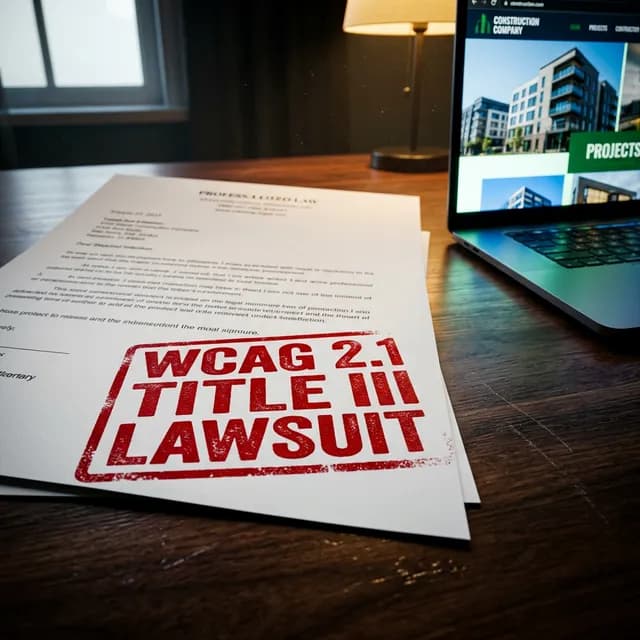
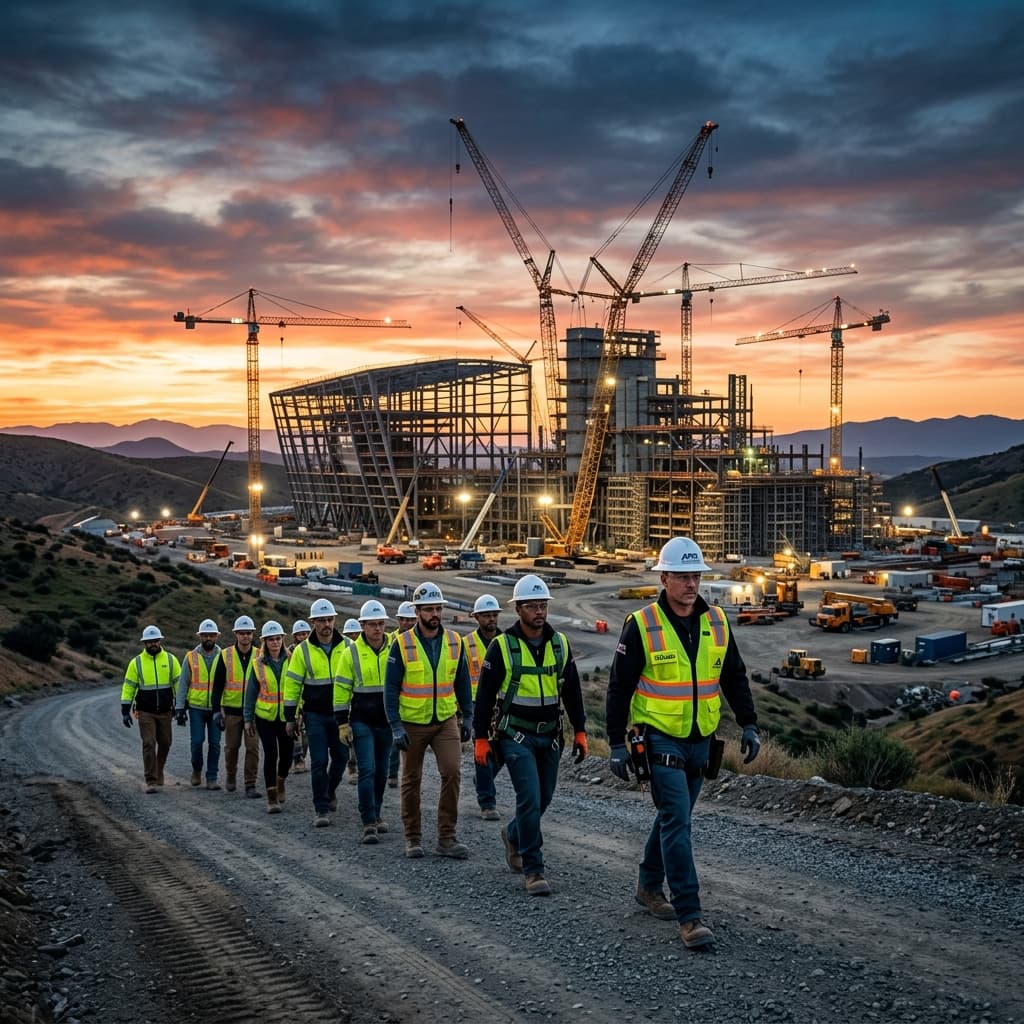
You execute multi-million dollar commercial developments across California, Texas, and Florida. You rely on a hyper-efficient, highly specialized bilingual workforce to pour concrete, install HVAC systems, and frame structures at industrial scale. Yet, your entire corporate digital infrastructure—your website, your subcontractor portals, your career applications—assumes a completely monolingual English audience. This is not just an oversight. It is a massive structural vulnerability that is actively bottlenecking your pipeline, isolating the exact 10-star subcontractor talent you are desperate to hire, and causing you to automatically forfeit lucrative municipal bids that strictly mandate multi-language accessibility. If your digital footprint does not speak the language of your highest-value workforce and stakeholders, your competitor's will.

The Sub-Contractor Acquisition War
The most brutal bottleneck in commercial construction today is not supply chain delays or material sourcing. It is elite labor acquisition. Finding reliable, 10-star framing crews, master electricians, and highly efficient concrete teams is a bloody, zero-sum war in markets like Los Angeles and Miami. The reality of these markets is indisputable: a massive percentage of your elite field talent—the foremen and crew leaders who actually dictate the speed and quality of your builds—function largely, or entirely, in Spanish.
When a highly competent, independent Spanish-speaking foreman attempts to assess your brand's credibility online, what does he find? If your "Careers" page, your "Our Culture" videos, and your "Become a Subcontractor" intake forms exist exclusively in dense, corporate English, you immediately deploy friction. You are forcing them to navigate a language barrier before they even interact with your superintendent. Worse, you send a highly damaging psychological signal: "We do not operate on your level."
The Friction Tax on Hiring
Friction in the onboarding process drives top talent directly to your competitors. A bilingual foreman with a crew of 20 highly skilled tradesmen will not waste time translating complex legal insurance requirements on your English-only subcontracting portal. He will simply take his crew to the developer down the street whose website seamlessly transitions into native, professionally translated Spanish, streamlining his Prequalification Phase in under ten minutes.

Compliance Deficits: Losing the Government Mega-Bids
If your aggressive firm is scaling towards massive $50M - $100M municipal contracts, public works projects, or state-funded infrastructural developments in heavily Hispanic demographics (like Southern California or South Texas), you face an entirely different tier of scrutiny. Government Request For Proposals (RFPs) are no longer just looking at your bonding capacity and your past project portfolio. They are deeply analyzing your community impact matrix and DE&I infrastructural compliance.
Many local municipalities actively mandate that contractors aggressively demonstrate how they will engage with the local demographic. They require public-facing project update portals, community feedback mechanisms, and local hiring initiatives. If your digital infrastructure cannot seamlessly deploy "Community Impact Reports" in both English and locally-localized Spanish, you will automatically be outscored during the bid process by a firm that has engineered the capability to speak to the *entire* constituency.
A monolingual architecture forces your bidding team to make excuses in the boardroom. A perfectly engineered multilingual Next.js application, dynamically routing native-translated case studies to municipal boards, proves irreproachable institutional competence.
Institutional Optics & Investor Relations
Consider the visual authority projected to an investing REIT or private equity firm when they land on your domain. A high-end toggle seamlessly shifting the entire corporate architecture into flawless Spanish without a page reload signals a level of operational sophistication that 99% of contractors simply do not possess. It screams scale. It screams absolute market dominance.
The Auto-Translate Scam: The Ultimate Technical Taboo
There is a horrific trend in the mid-market construction sector when executives finally realize they need Spanish capabilities. They rely on their cheap WordPress developer, who predictably installs a free "Google Translate" widget in the footer of the site. They check the "bilingual" box on their execution strategy and walk away.
Do not ever do this. It is a catastrophic degradation of your brand equity.

Machine-generated widgets do not understand the hyper-specific, nuanced lexicon of commercial construction architecture. They will brutally mistranslate technical engineering terms. They will butcher complex insurance terminologies. "Pre-construction coordination" will be mangled into literal, nonsensical Spanish that makes your firm look entirely unprofessional to a native speaker.
Furthermore, from a deep-level technical architecture standpoint, JavaScript translation widgets operate on the client-side *after* the page is loaded. This means search engine crawlers (like Googlebot) NEVER see the Spanish text. The widget literally provides ZERO SEO benefit because the Spanish pages do not structurally exist on the server.
Next.js i18n: True Multilingual Architecture
To dominate this sector, your digital platform must be engineered using strict, server-side internationalized routing (i18n). When deployed utilizing elite Next.js frameworks, your entire corporate website literally exists in two perfectly parallel server instances.
- Server-Side Rendering (SSR): The Spanish text is hardcoded into the localized route (`/es/portfolio`), meaning it loads in sub-milliseconds and is immediately readable by Google crawler bots.
- Flawless Native Copywriting: Instead of algorithms, the text is statically generated from localized JSON files (`es.json`). This allows a professional, bilingually-fluent construction technical writer to carefully craft the grammar, tone, and industry-specific terminology so the Spanish copy carries the exact same aggressive, premium "Sentry Tone" authority as the English.
- Hreflang Mastery: Code-level `hreflang` tags flawlessly instruct Google's algorithms: "This is the exact equivalent of our English capability statement, specifically targeted for Spanish-speaking traffic within the United States." This prevents duplicate content penalties and explicitly dominates local search.

The "Zero-Competition" Organic Traffic Multiplier
This is the tactical masterstroke. Every major contractor in your county is burning $10,000 a month competing for the english keyword "Commercial Concrete Contractor Los Angeles." But almost zero elite firms have properly engineered server-side Next.js architectures to capture the Spanish-equivalent search volume. Sub-contractors, local developers, and Hispanic investors are executing highly specific, high-intent searches in Spanish every single day. If your site is technically built to index localized Next.js pages, your brand automatically vacuums up this highly lucrative, completely uncontested organic traffic pipeline.
The Sentry Decree: Evolve or Be Replaced
Your competitors are complacent. They view digital translation as a tedious HR exercise. You must leverage it as an aggressive weapon of mass talent acquisition and municipal contract dominance. The companies that command the next decade of commercial construction in markets like California and Texas will be the organizations whose digital infrastructure unconditionally respects and absorbs the reality of the region's demographics.
A monolingual architecture is a sign of operational decay. It means your firm has stopped evolving. Burn it to the ground. Rebuild it in a high-performance Next.js dual-language framework. Assume total command of the talent pipeline.

Engineer Absolute Digital Dominance Today
Stop bleeding elite pipeline and forfeiting municipal bids because your old website relies on cheap English-only WordPress templates. Lemonade Ideas architects hyper-fast, natively bilingual Next.js corporate frameworks designed to command the industry and weaponize organic SEO in multiple languages.
Deploy Multilingual Architecture