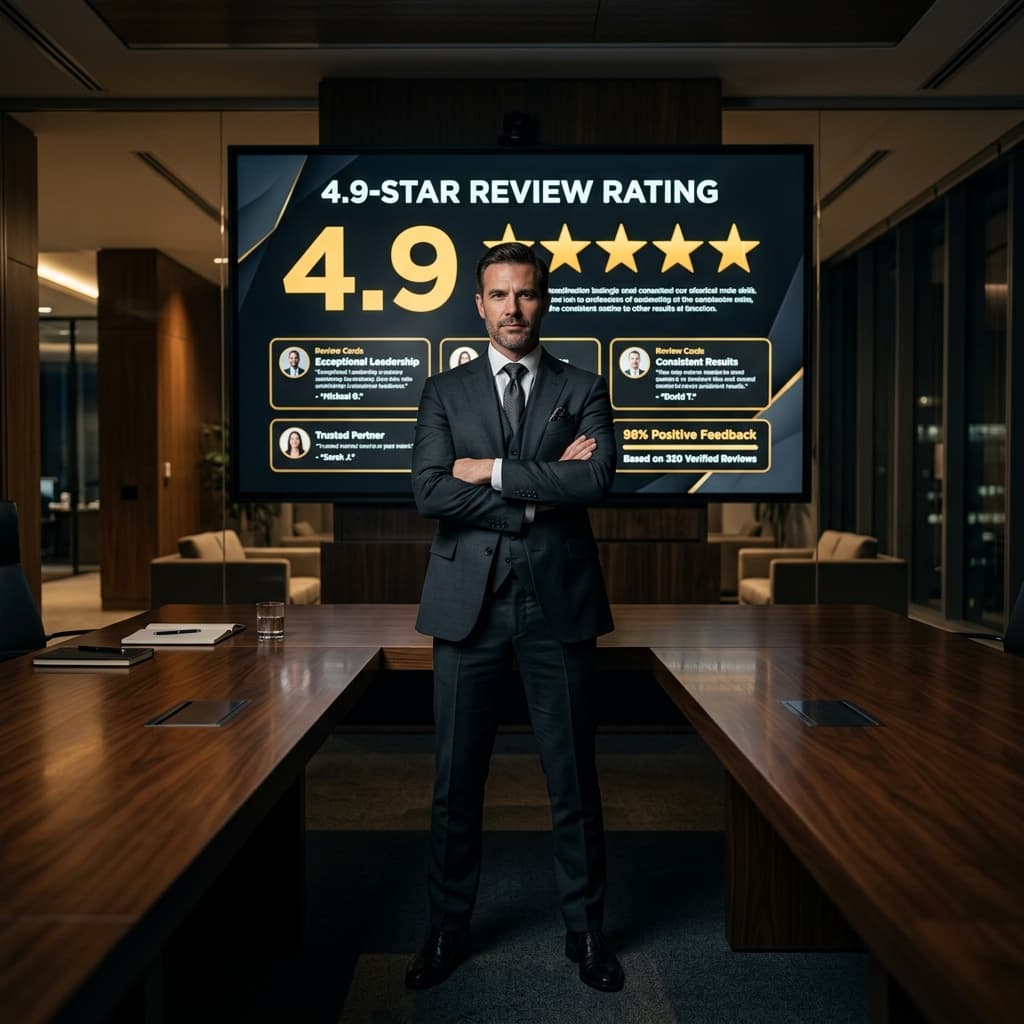
Let's address the elephant in the sales room: written reviews are no longer enough to win 7-figure commercial bids. Your competitor has five stars on Google; you have five stars on Google. When the playing field looks identical on paper, the buyer defaults to the lowest price. Here is how you shatter that commodity trap using high-fidelity, documentary-style contractor video testimonials.
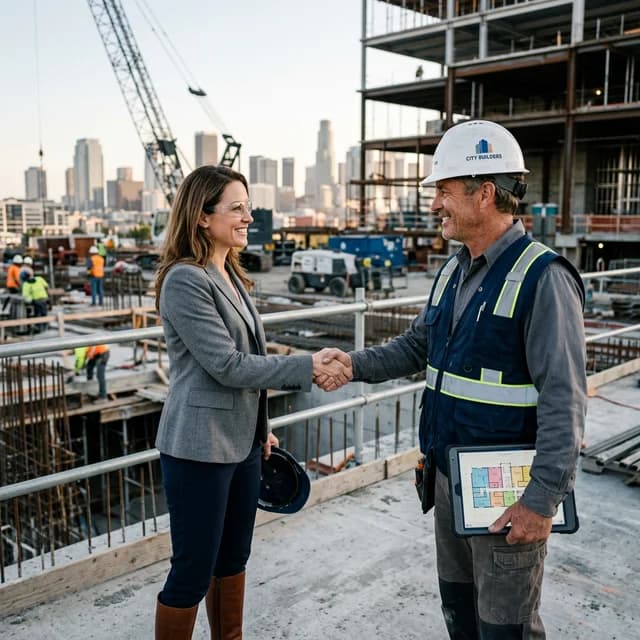
I’ve always felt that contractors massively underestimate the psychological skepticism of their buyers. Put yourself in the shoes of a corporate property manager about to award a $4.5 million tenant improvement contract. They are risking their career, their budget, and their timeline on your word.
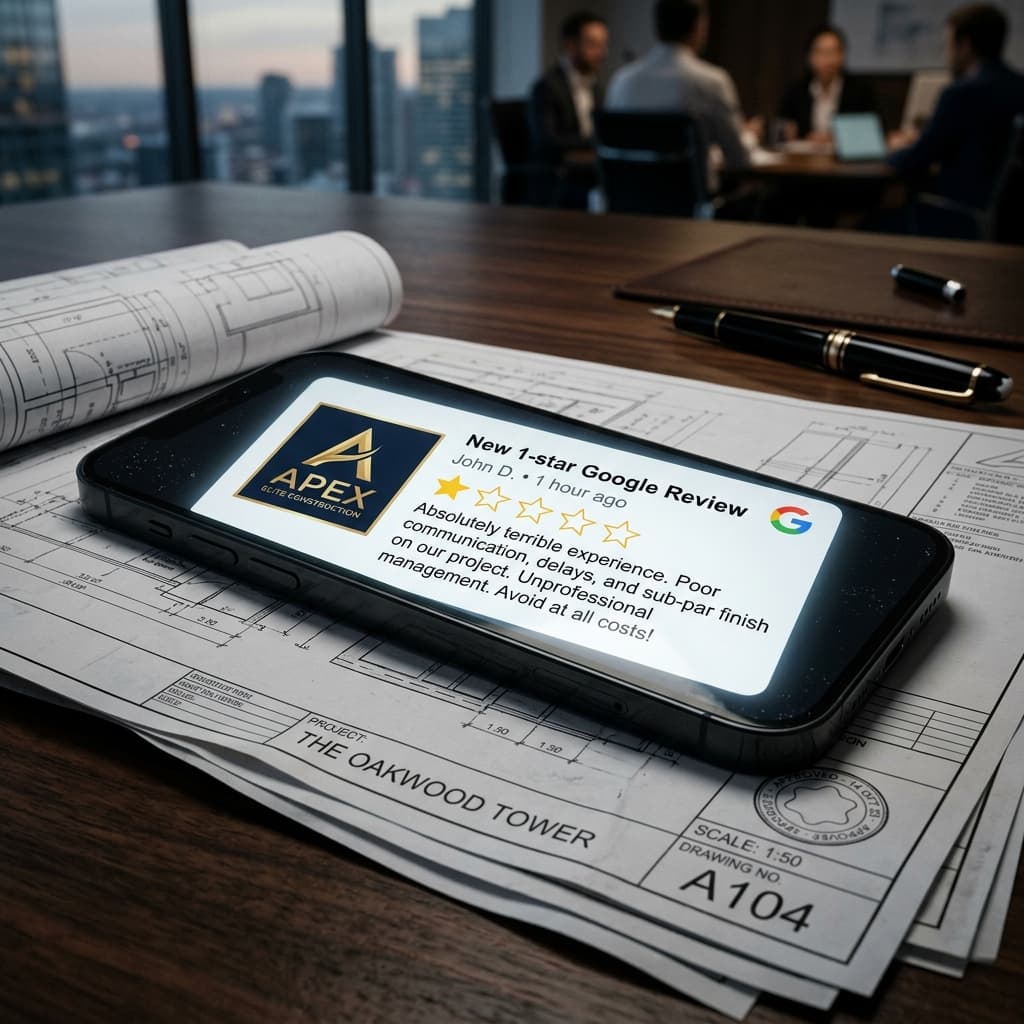
Does that sound familiar? They aren't going to alleviate that anxiety by reading a two-sentence Google review that says, "Great guys, very fast." They know fake reviews exist. They know friends and family write reviews. They crave visceral, undeniable proof that you won't ruin their life for the next six months.
That is exactly why you must integrate contractor video testimonials into your sales pipeline. A video forces the prospect to look into the eyes of a peer—another executive who took the exact same financial risk they are about to take—and hear them confidently declare that you delivered on your promises. You can't fake that level of authenticity. And frankly, you can't put a price tag on the trust it generates.
The Financial ROI of Video Integration
A lot of construction owners hesitate to invest in video because they view it as an "art project." They think it's a vanity metric designed to make the marketing coordinator feel good. But here's the kicker: video testimonials are mathematically proven to dramatically lift landing page conversions.
According to extensive B2B marketing data, embedding a high-quality video testimonial on a conversion landing page can increase the conversion rate by up to 86%. Let's break down the math.
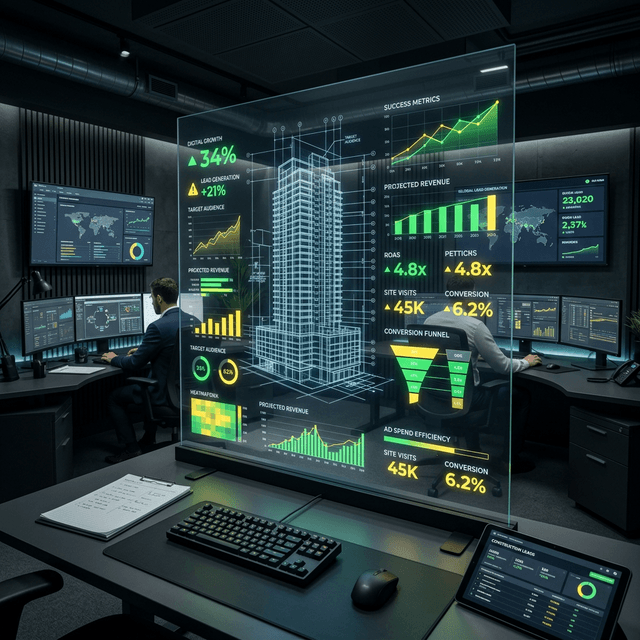
Let's say your current website traffic generates 10 qualified commercial leads a month at a 2% conversion rate. If a video testimonial boosts that conversion rate to merely 3.5%, you are nearly doubling your deal flow without spending a single extra penny on Google Ads or SEO traffic. If your average contract value is $500k, that single video asset is effectively dropping millions into your pipeline annually.
The iPhone Trap
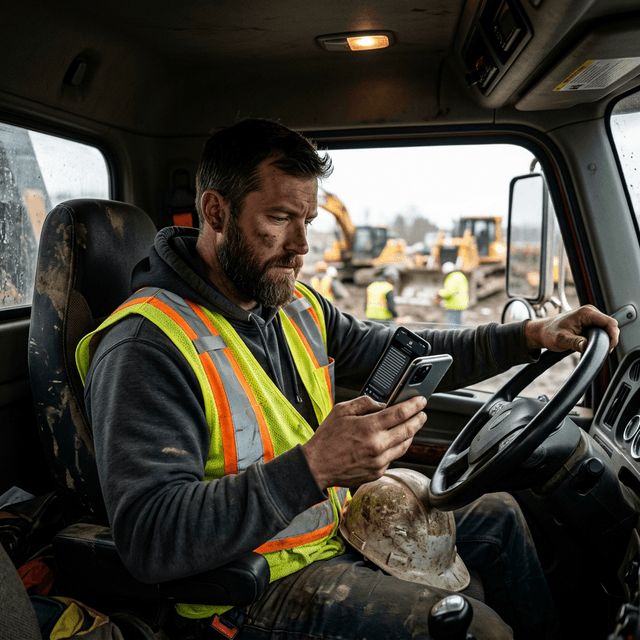
Please, stop having your superintendents film clients on their iPhones in portrait mode with wind blowing loudly in the background. While raw authenticity is good, atrocious audio instantly kills your credibility. You are a high-ticket B2B service provider. Your media must reflect that premium positioning. If you want them to trust you with a seven-figure contract, don't show them a poorly lit cell phone video.
How to Ask Your Clients Without Being Awkward

The number one reason contractors don't have video testimonials is simply that they never ask. They feel like they are imposing on the client.
Here is the secret: you have to bake the testimonial request into your standard operating procedure from day one. Do not wait until the final walk-through to spring a camera crew on them.
During the initial project kick-off meeting, tell them directly: "Our goal on this build is to blow your expectations out of the water. In fact, our ultimate goal is for you to be so thrilled with the result that you'll agree to sit down for a quick 10-minute video interview when we hand over the keys. Does that sound fair?"
Every single client will smile and say yes. You have just planted the seed. You've also set a standard of excellence for your own crew. When the project finishes effortlessly, you simply remind them of that day-one promise. It eliminates the awkwardness completely.
The "Heavy Lifting" Approach
Make the process completely frictionless. Corporate clients are incredibly busy. You must make it explicitly clear that this will strictly take 15 minutes of their time.
Tell them: "We will bring the videographer directly to your office or the job site. We will handle all the lighting, the audio, and the editing. You do not need to prepare a script. We just want to ask you three quick questions about your experience. It will take 15 minutes max." When you remove the friction, the conversion rate on the ask skyrockets.
The Strategic Interview Framework
Do not give the client a script to read. Nothing ruins a testimonial faster than a CEO shifting their eyes to read bullet points off a teleprompter. It instantly destroys the authenticity factor we are desperately trying to cultivate.
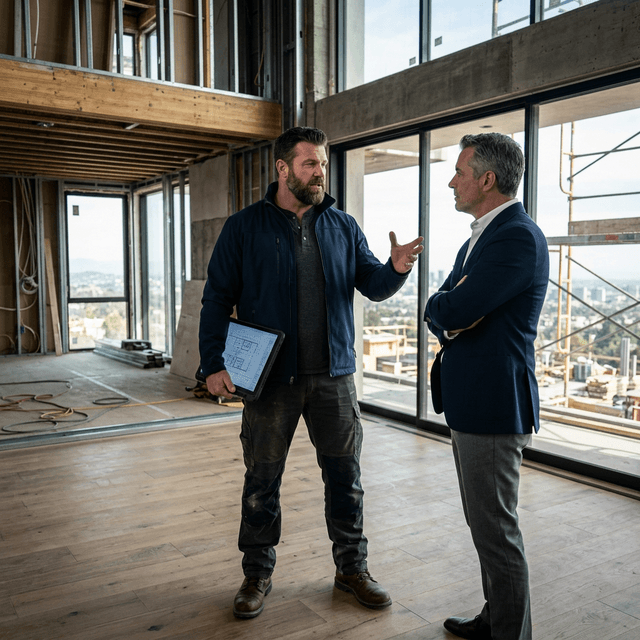
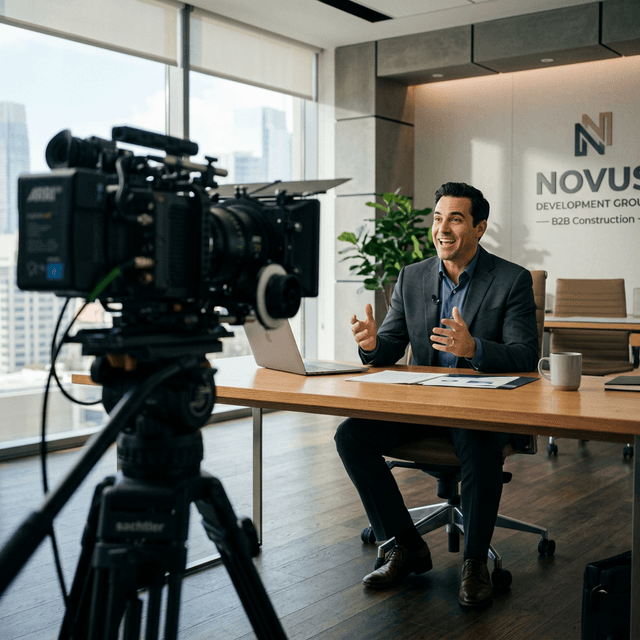
Instead, you need to conduct a guided, documentary-style conversational interview. You sit directly next to the camera lens so the client maintains a natural, conversational eyeline. And to ensure the editor gets exactly what they need, you instruct the client to incorporate the question into the beginning of their answer. (e.g., Question: Why did you hire us? Answer: We hired Lemonade Builders because...)
The 4 Core Questions:
- 1. The Baseline Pain: "Before you hired us, what was your biggest frustration with other contractors on past commercial builds?"
- 2. The Decision Factor: "Why did you ultimately choose our firm over the three other bids you received?"
- 3. The Execution: "During the actual build phase, what surprised you the most about how our project managers operated?"
- 4. The ROI: "If you were speaking to another developer considering hiring us, what would you tell them about the final result?"
The Power of Negative Anchoring
Question #1 is arguably the most vital. You want the client to openly discuss the pain and chaos they experienced with your competitors. When your next prospect watches the video, they will immediately relate to that exact frustration. By anchoring the video in their painful past experiences, your flawless execution looks infinitely more valuable.
Production Value: Why Audio Trumps Video

I am not suggesting you need a Hollywood budget to shoot these assets, but you absolutely cannot skimp on the audio quality. Humans will tolerate slightly grainy smartphone video if the message is compelling; they will immediately click away if the audio echoes, crackles, or is drowned out by a passing bulldozer.
Always use a professional lavalier microphone pinned directly to the client's lapel. If you hire a local freelance videographer (which you should), confirm they are utilizing a dual-system audio setup.
When it comes to the visual setup, aim for environmental depth. Do not stand them flat against a white wall like a hostage video. Seat them in their finished office or on an active job site, far away from the background, and use a fast lens (like an f/1.8 or f/2.8) to massively blur the background into a cinematic bokeh. This immediately elevates the production quality and screams "premium B2B entity."
The Art of the B-Roll Edit
Nobody wants to stare at a "talking head" for three minutes straight. The brain gets bored. You must intercut the interview footage with high-quality B-roll of the actual construction project.
When the client says, "They kept the site incredibly organized," the editor must immediately cut to a slick drone shot or a stabilized gimbal panning across your immaculate job site. When they mention your "attention to detailed trim work," cut to a macro close-up of your carpenters installing custom millwork.
B-roll serves as the visual evidence to back up the client's verbal claims. The bottom line? The synergy between an executive giving an unscripted compliment layered over cinematic footage of your crew executing flawlessly is the most potent weapon in modern construction marketing.
Distribution Strategies: The ROI Multiplier

Creating this asset is only phase one. If you publish it strictly to a buried tab on your website and abandon it, the ROI will be abysmal. You have paid for a highly polished marketing weapon; now you have to inject it violently into your sales funnel.
First, embed the full 2-to-3 minute video directly into the Hero section of your localized landing pages. If you are running Google Ads for "Commercial General Contractor Austin," the exact webpage that clicks through needs to feature that video above the fold.
Second, atomize the content. Have your editor slice the 3-minute macro video into six 30-second micro clips formatted dynamically with heavy captions. Deploy these aggressively across LinkedIn and YouTube Shorts. When prospective developers scroll LinkedIn during their lunch break, they shouldn't just read an update from your company page—they should see their peers validating your brand directly on camera.
Finally, integrate it into your direct sales email sequence. When you send an initial bid proposal to a new prospect, include a thumbnail link in the signature that says: "Why Developers Trust Us With 7-Figure Deadlines [Watch The 2-Min Video]." You are completely pre-framing the prospect to view you favorably before they even open the pricing spreadsheet.
The Post-Production Edit: Trimming the Fat
Listen, your client might be the greatest real estate developer in the state, but chances are they are not a trained on-camera actor. They are going to ramble. They are going to use filler words. They might take three minutes to answer a question that could have been answered in 20 seconds.
This is exactly why you hire a professional editor. A raw, unedited 15-minute interview is absolutely useless. Your prospective buyer does not have 15 minutes to spare. The editor's job is to ruthlessly chop that 15 minutes down into a highly concentrated, 2.5-minute highlight reel of pure value.
Plus, a great editor won't just compile the answers chronologically. They will structure the video like a Hollywood trailer. They will rip the most emotional, powerful soundbite—perhaps the client saying, "I genuinely don't know if our business would have survived if Lemonade Builders hadn't hit that opening deadline"—and they will stick that soundbite in the very first five seconds of the video as a hook.
That initial five seconds is where you win or lose the viewer. If the video starts with 20 seconds of your client slowly clearing their throat and explaining what their company does, the viewer is already gone. Boom. Gone. You need to hit them instantly with the dramatic payoff.
Scaling the Trust Engine Across Multiple Departments
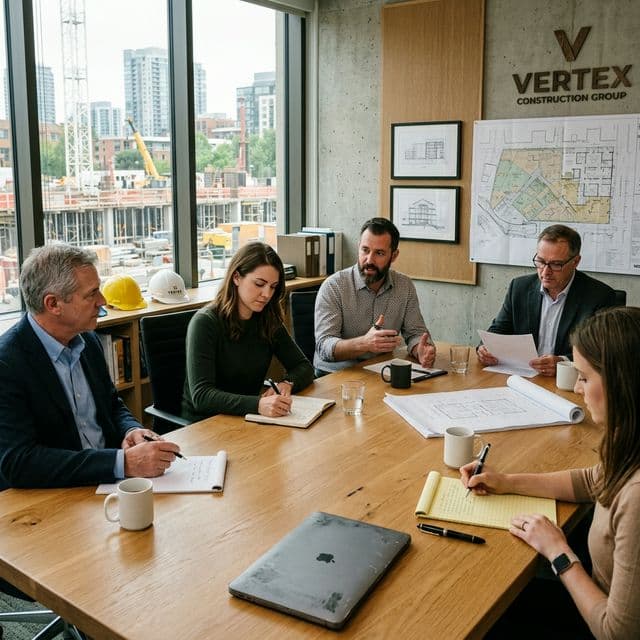
Once you have captured three or four of these high-tier video testimonials, you possess an incredibly dangerous competitive moat. But you cannot silo these entirely within the marketing department. Your sales department, your estimating department, and even your project management team need to utilize them actively.
Think about the estimating phase. The estimator sends over the $2.5 million bid. The client pushes back on a specific line item, claiming your competitor bid it $50,000 cheaper. How does the estimator respond? Do they instantly cave and slash the margin? No.
The estimator replies with a link to a specific video testimonial from a client who had that exact same concern. The estimator says: "I completely understand your hesitation on that line item. I actually had a conversation with Sarah from TechCorp last year about this exact issue. She was worried about our pricing structure too. I'm attaching a 90-second video where she explains why paying our upfront premium ultimately saved her $200,000 on the back-end via value engineering."
That is how you protect your margins. You deploy your past clients to fight your future pricing battles for you. Your past clients have infinitely more credibility than your sales team ever will, mainly because they aren't on your payroll.
Repurposing Assets for Humanized Brand Awareness
Let's talk about omnipresence. A 3-minute macro testimonial is fantastic for a dedicated landing page, but what about top-of-funnel brand awareness? What about the thousands of local developers who have never heard of your firm?
You hand the raw footage to a social media editor and instruct them to chop it into 15 to 30-second micro-clips. You overlay those clips with large, highly legible captions (often called the "Alex Hormozi" style) because 85% of social media users scroll with their sound muted.
If a local developer is waiting in line at a coffee shop scrolling Instagram, and they see a vibrant, captioned video of a fellow developer raving about how you fundamentally fixed their supply chain headaches, you have just inserted a powerful trust signal into their subconscious. When they eventually need to build a new warehouse next year, your firm isn't just a generic brand name—it's the firm that they watched solve problems for a colleague.
This is the math of modern B2B marketing. Every dollar you spend capturing and distributing these client interviews pays exponential dividends across every single phase of your lead generation funnel.
The Psychology of Visual Evidence
Why exactly does video out-convert text by such staggering margins? It all comes down to the psychology of risk mitigation. When a corporate buyer is evaluating a million-dollar contract, the logical part of their brain is looking for qualifications, insurance, and capacity. But the emotional part of their brain—the part that actually signs the check—is terrified of making a career-ending mistake.
Text cannot assuage that emotional terror. A written quote on a website feels sterile; it feels manufactured. But when they see another human being on video, their brain instantly analyzes thousands of micro-expressions. Are they smiling genuinely? Do they sound relaxed? Is their body language open and confident?
If the client in the video looks legitimately relieved and thrilled with the outcome, the mirror neurons in the prospective buyer's brain fire in sympathy. They unconsciously absorb that relief. They begin to associate your brand not with the stress of a pending construction project, but with the ecstatic relief of a successfully completed one. You cannot code that emotional transfer into an HTML widget, and you certainly cannot convey it through a five-star Google rating.
Furthermore, visual evidence provides spatial and environmental context. If your target demographic is enterprise logistics companies, and your video testimonial features a warehouse manager standing inside a massive, 200,000 square-foot facility that you just built, you are non-verbally communicating that you have the infrastructure to handle massive scale. The prospect sees the high ceilings, the immaculate concrete pour, and the advanced lighting systems in the background of the shot. The interview itself becomes a secondary tour of your capabilities.
The Halo Effect
In psychology, the Halo Effect dictates that positive impressions of a person or brand in one area positively influence opinions in other areas. By investing in premium, high-fidelity video production, the prospect unconsciously assumes your construction work is equally premium, high-fidelity, and flawless. The quality of your marketing directly dictates the perceived quality of your lumber and steel.
The Ultimate Trust Signal
Yes, setting up interviews, hauling camera gear, and navigating editing software takes considerably more effort than badgering a client for a generic text review. But we need to look at the macro picture. You are not selling a $50 consumer widget. You are asking highly intelligent professionals to trust you with ungodly sums of capital and unmovable corporate deadlines.
They assume you are going to say you are the best. They expect your website to say you are the best. None of that builds trust. The only psychological shortcut to leapfrogging your entrenched competitors is showing the buyer that someone exactly like them already took the leap and succeeded wildly.
Start asking your happiest clients today. Book a videographer. Build the asset. Once that trust engine begins turning, you will find yourself in the incredibly luxurious position of declining bids instead of chasing them.

Ready to Upgrade Your Marketing Engine?
If you want to stop competing helplessly on price and start commanding premium margins by weaponizing client video assets, we need to completely overhaul your digital strategy. Let's architect a proper B2B pipeline.
Request a Strategy Session